


What we hear when we sit down with operators
It is rarely the waiter's mistake. The terminal and the till are simply two separate worlds. Staff retype the amount, watch the terminal screen, and only then have to close the bill correctly in the POS.
In a rush, one dropped connection, a wrong amount or an unclear terminal response is enough to open a gap between what was paid, what the fiscal register recorded and what the restaurant has at close of day.
Why fixing a single step is not enough
Payment is part of the sale, not a separate job. If the terminal, the POS and fiscalisation do not know about each other, the manual work appears exactly when the team is busiest.
The amount goes from the POS straight to the terminal
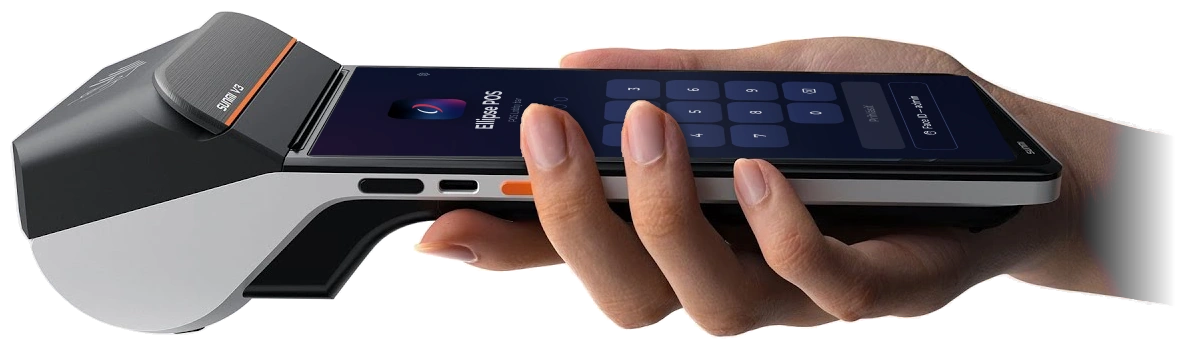
Staff close the bill in Ellipse POS and choose card payment. The amount is sent to the connected terminal with no retyping. That removes a very common error — one amount on the terminal and another in the till.
The guest can pay by card, phone or watch, depending on the terminal. Staff stay with the guest instead of checking two screens.
The payment result has to come back
A successful, declined or interrupted payment has to return to the POS. Only a successful transaction closes the bill as a card payment.
If the terminal does not confirm the payment, the bill stays open and staff know they should retry or choose another method. They are not guessing.
The receipt comes from the same sale
The till records the items sold, the VAT rates and the payment method. The fiscal document follows the real bill, not an amount typed into the terminal by hand.
In a hotel the same principle works at reception, the bar, wellness or any other point of sale.
The manager sees the link between takings and payments
When the POS and the payment flow are connected, the close of day makes more sense: card takings can be compared with payment transactions, and the gaps are much easier to find.
The aim is not to remove every check. The aim is that checking deals with exceptions, not with every single payment.
WHAT CHANGES ON SITE
What changes in the daily work
- Less manual retyping of amounts into the terminal.
- The bill closes only after the payment is confirmed.
- Staff clearly see a declined or interrupted transaction.
- The fiscal register, the POS and the card payment follow one another.
- The evening close has fewer unexplained gaps.
CONNECTED ELLIPSE MODULES
The solution does not live in an isolated module
 Ellipse POS
 Ellipse Pay
COMMON QUESTIONS
What operators ask us
What if the terminal declines the payment?
The POS bill stays open and staff can try another card or another payment method.
Does this work with the mobile waiter too?
Yes. Depending on the hardware and the integration, payment can be part of the mobile POS workflow.
Can the terminal still be used on its own?
Technically yes, but the real gain for the operation comes from connecting the POS and the terminal.
How is a payment void handled?
A void or a refund has to follow the payment provider's rules and still point at the right document in the POS.
HOW WOULD THIS WORK FOR YOU?
Show us one real payment, from the order to the receipt
On the demo we walk the whole flow: the bill, the terminal, the payment result, the fiscal document and the close of day. That is where you see how many manual steps can go.