


What we hear when we sit down with operators
Overbooking often does not happen because the hotel sold the room twice. The cause can be a wrong category mapping, an OTA delay, a manual change or a sync error.
No system can guarantee absolute zero risk, because part of the communication runs through external portals. A good system does minimise the risk, and above all it shows when a sync has failed.
Why fixing a single step is not enough
The point is not to have several extranets open at once. The point is one source of availability and a clear mapping between the PMS, Web Booking and the Channel Manager.
Availability is born in the PMS
Ellipse PMS holds the hotel's real capacity. The Channel Manager distributes selling allotments from that availability to the supported OTA and GDS channels.
Your own Web Booking works on the same availability, so direct and intermediary sales do not compete with separate numbers.
Every OTA category has to be mapped correctly
If Double Room on the portal is linked to the wrong category in the PMS, even a fast sync will not help. That is why mapping rooms and rate plans is a critical part of the implementation.
When categories or rate plans change, it is worth checking the mapping again.
A new booking has to reduce availability as soon as possible
After a booking arrives, the stay is written into the PMS and availability is recalculated. The Channel Manager then sends the new capacity to the other channels.
On the last rooms every second matters, but you still have to allow for the external portal having its own delay.
Monitoring matters as much as the sync itself
If a portal rejects a rate, availability or a booking, the system should make the error visible. A silent error is more dangerous than an error the front desk can see.
When something goes wrong, the communication history matters: what was sent, when, and with what result.
WHAT CHANGES ON SITE
What changes in the daily work
- One source of availability for the website and the OTAs.
- Less manual capacity setting in the extranet.
- Faster writing of bookings onto the hotel tape chart.
- Sync errors that are easier to see.
- A lower risk of overbooking and a faster fix when something fails.
CONNECTED ELLIPSE MODULES
The solution does not live in an isolated module
 Channel Manager
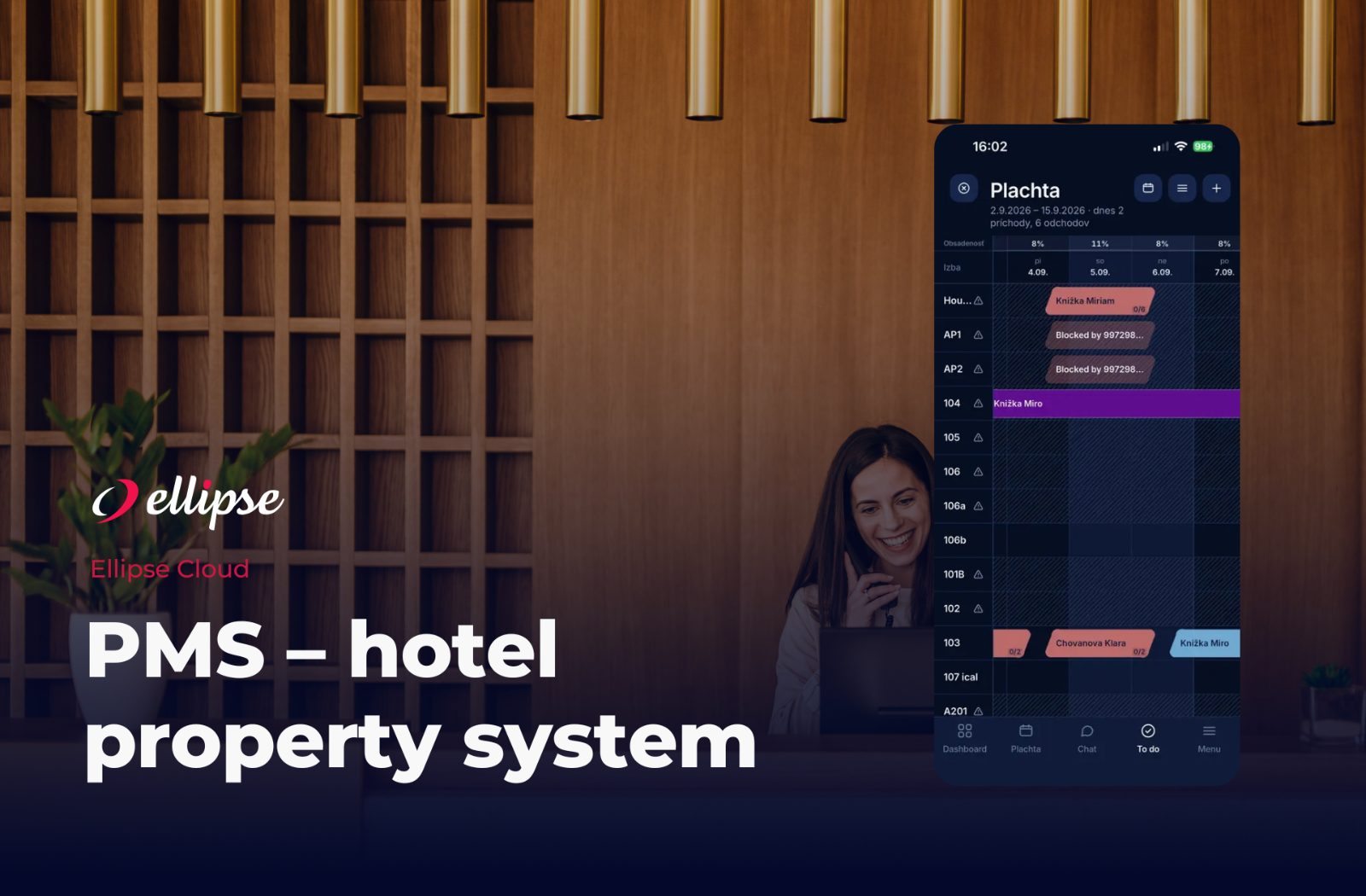 Hotel PMS
 Web Booking
COMMON QUESTIONS
What operators ask us
Can a channel manager rule out overbooking completely?
Not completely, because the communication also includes external systems. It can, however, cut the risk sharply.
What is room mapping?
The link between a category or rate plan on the OTA and a specific category and rate in the PMS.
What happens after a booking from Booking.com?
With a supported connection the booking is written into the PMS and availability is then updated on the other channels.
Does it make sense to keep a manual allotment?
For some commercial models yes, but it has to be clearly separate from availability that syncs dynamically.
HOW WOULD THIS WORK FOR YOU?
Let us check the mapping and the path of the last free room
In the walkthrough we can go through a real category, its availability, the portals and the moment a booking arrives. That is the best test of a correct setup.